-
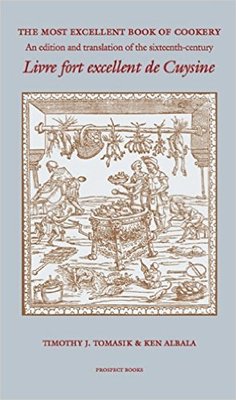
The Most Excellent Book of Cookery = Livre fort excellent de cuysine (1555)
Ken Albala and Timothy Tomasik
The Livre fort excellent de cuysine is one of a family of cookery books that first saw the light with Pierre Sergent’s La Fleur de toute cuysine (renamed Le Grand cuisinier de toute cuisine) of 1542. This edition of the Livre fort excellent was published in 1555. Scholars have often dismissed the printed cookbooks of 16th-century France as simple rehashes of the great medieval Viandier of Taillevent or as merely concentrating on marginal dishes such as sweets and sugarwork. True French cooking, they say, did not start until the publication of Le Cuisinier françois by La Varenne in 1651. While there is some truth in this, the translators and editors of this book would maintain that the change from medieval to modern (already under way in Italy and Spain for example) can be dated back to this book and its kindred; that it was more than a plagiaristic copy. The Livre fort comprises about 70 pages of original French, with an English translation on facing pages.
-
Food in Time and Place: The American Historical Association Companion to Food History
Paul Freedman, Joyce Chaplin, and Ken Albala
Food and cuisine are important subjects for historians across many areas of study. Food, after all, is one of the most basic human needs and a foundational part of social and cultural histories. Such topics as famines, food supply, nutrition, and public health are addressed by historians specializing in every era and every nation.
Food in Time and Place delivers an unprecedented review of the state of historical research on food, endorsed by the American Historical Association, providing readers with a geographically, chronologically, and topically broad understanding of food cultures—from ancient Mediterranean and medieval societies to France and its domination of haute cuisine. Teachers, students, and scholars in food history will appreciate coverage of different thematic concerns, such as transfers of crops, conquest, colonization, immigration, and modern forms of globalization.
-
Grow Food, Cook Food, Share Food: perspectives on eating from the past and a preliminary agenda for the future
Ken Albala
Grow Food, Cook Food, Share Food is a practical food history lesson, an editorial about everything gone wrong with modern food, and a call to arms of the kitchen knife variety. Historian Ken Albala relates his experiences of growing, cooking, and sharing food in ways that people did in the past, ways that we have needlessly lost. He finds lessons in surprising places, including obscure seventeenth century Italian farmer/nobles, ancient statesmen, and quirky cheesemakers from centuries ago. A rare but important variety of historical activism, Grow Food, Cook Food, Share Food uses history to enrich people's lives through a greater awareness and appreciation of what they put in their bodies.
-

パンケーキの歴史物語 (Pankeki no rekishi monogatari)
Ken Albala and Mitsuhuro Sekine
Round, thin, and made of starchy batter cooked on a flat surface, it is a food that goes by many names: flapjack, crêpe, and okonomiyaki, to name just a few. The pancake is a treasured food the world over, and now Ken Albala unearths the surprisingly rich history of pancakes and their sizzling goodness.
-
Routledge International Handbook of Food Studies
Ken Albala
Over the past decade there has been a remarkable flowering of interest in food and nutrition, both within the popular media and in academia. Scholars are increasingly using foodways, food systems and eating habits as a new unit of analysis within their own disciplines, and students are rushing into classes and formal degree programs focused on food.
Introduced by the editor and including original articles by over thirty leading food scholars from around the world,the Routledge International Handbook of Food Studies offers students, scholars and all those interested in food-related research a one-stop, easy-to-use reference guide. Each article includes a brief history of food research within a discipline or on a particular topic, a discussion of research methodologies and ideological or theoretical positions, resources for research, including archives, grants and fellowship opportunities, as well as suggestions for further study. Each entry also explains the logistics of succeeding as a student and professional in food studies.
This clear, direct Handbook will appeal to those hoping to start a career in academic food studies as well as those hoping to shift their research to a food-related project. Strongly interdisciplinary, this work will be of interest to students and scholars throughout the social sciences and humanities.
-
Three World Cuisines: Italian, Mexican, Chinese
Ken Albala
Knowledge of Italian, Mexican, and Chinese cuisines illuminates many of the great historical themes of the past 10,000 years as well as why we eat the way we do today.
-
The Lost Arts of Hearth and Home
Ken Albala and Rosanna Nafziger Henderson
A celebration of the new old-fashioned approach to living - from soapmaking to sewing to bread baking and much more. It is not about extreme, off-the-grid-living, but these projects are decidedly unplugged and a little daring.
-
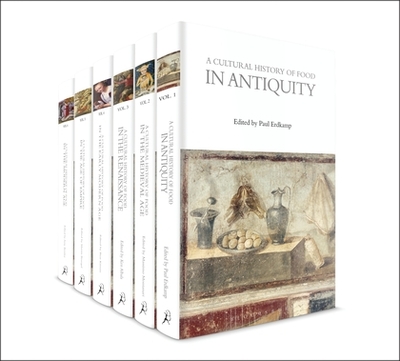
A Cultural History of Food in The Renaissance
Ken Albala, Fabio Parasecoli, and Peter Scholliers
A Cultural History of Food presents an authoritative survey from ancient times to the present. This set of six volumes covers nearly 3,000 years of food and its physical, spiritual, social and cultural dimensions. - See more at: http://www.bloomsbury.com/us/a-cultural-history-of-food-9781847883551/#sthash.LF11bLyZ.dpuf
-
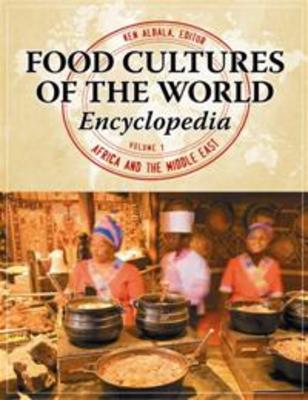
Food Cultures of the World Encyclopedia
Ken Albala
Going out for Ethiopian, Argentine, or Malaysian food—or some other international cuisine—may be all the rage these days, but understanding the world's food cultures goes far beyond sampling the fare of the latest "exotic" restaurant. For example, learning the history behind the eating of tahricht (oven-baked sheep offal) among the Berber peoples of northern Africa, or how an average family in the Philippines shops for food, or why Brazilian chefs are focusing more than ever on using culturally important ingredients—all of these are part of understanding global food cultures.
-
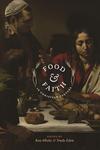
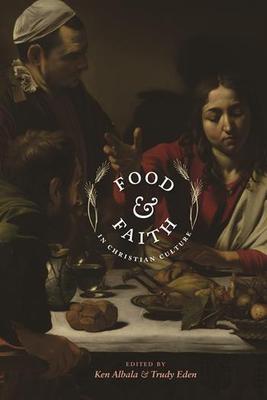
Food and Faith in Christian Culture
Ken Albala and Trudy Eden
Without a uniform dietary code, Christians around the world used food in strikingly different ways, developing widely divergent practices that spread, nurtured, and strengthened their religious beliefs and communities. Featuring never-before published essays, this anthology follows the intersection of food and faith from the fourteenth to the twenty-first century, charting the complex relationship among religious eating habits and politics, culture, and social structure.
Theoretically rich and full of engaging portraits, essays consider the rise of food buying and consumerism in the fourteenth century, the Reformation ideology of fasting and its resulting sanctions against sumptuous eating, the gender and racial politics of sacramental food production in colonial America, and the struggle to define "enlightened" Lenten dietary restrictions in early modern France. Essays on the nineteenth century explore the religious implications of wheat growing and breadmaking among New Zealand's Maori population and the revival of the Agape meal, or love feast, among American brethren in Christ Church. Twentieth-century topics include the metaphysical significance of vegetarianism, the function of diet in Greek Orthodoxy, American Christian weight loss programs, and the practice of silent eating rituals among English Benedictine monks. Two introductory essays detail the key themes tying these essays together and survey food's role in developing and disseminating the teachings of Christianity, not to mention providing a tangible experience of faith.
Printing is not supported at the primary Gallery Thumbnail page. Please first navigate to a specific Image before printing.