


Files
Download Primary (692 KB)
Course Name
Clinical Improvement Project II CAPSTONE
Graduation Year
2026
Faculty Advisor
Jennifer Tudor
Abstract
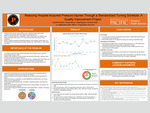
Hospital-acquired pressure injuries (HAPIs) remain a patient safety concern that can increase complications, length of hospital stay, and healthcare costs. This quality improvement (QI) project aimed to improve adherence to an every two hours (Q2H) turning schedule to 90% and reduce HAPI rates by 10% among patients with Braden Scale scores of 18 or lower in a progressive care unit (PCU). The project used the Plan-Do-Study-Act (PDSA) framework to implement a standardized turning schedule through turning clocks, staff education, visual reminders, and interdisciplinary collaboration. Observational audits were conducted over ten weeks, from August 27 to October 29, 2026, to evaluate whether patient positions matched the scheduled turning positions. A total of 80 observations were recorded across 14 audit dates, with 49 matching the scheduled positions, resulting in an overall observed position match rate of 61.3%. The remaining 31 observations (38.8%) did not match the scheduled positions. Weekly match rates ranged from 33.3% to 85.7%, indicating variations throughout implementation. Although the overall match rate remained below the project's target of 90%, the findings reflected observed patient positions rather than confirmed Q2H turning compliance. Hospital QI data showed seven HAPI cases from January through August 2026, including two cases in August with unconfirmed dates. No HAPI cases were reported in September following implementation on August 27, 2026, or during the preliminary October reporting period of October 1–5, 2026. However, the specific dates of the two August cases remained unconfirmed, and October data were incomplete. Therefore, the findings did not establish whether the project achieved its targeted 10% reduction in HAPI rates. The findings highlighted opportunities to improve repositioning practices through continued staff education, teamwork, communication, 3 and routine monitoring. Ongoing audits and evaluation of HAPI outcomes may help determine the long-term effectiveness and sustainability of the intervention.
Keywords
hospital-acquired pressure injuries, quality improvement, repositioning, turning schedule, Braden Scale, pressure injury prevention
Recommended Citation
Escobar, Grizzell; Moua, Susan; Nguyen, Trang; and Perez, Ximena, "Reducing Hospital-Acquired Pressure Injuries Through a Standardized Turning Schedule QI Poster" (2026). ELMSN E-Portfolio. A collection of Scholarly and Creative Works. 61.
https://scholarlycommons.pacific.edu/nursing-portfolios/61
