


Course Name
Clinical Improvement Project II CAPSTONE
Graduation Year
8-2026
Faculty Advisor
Dr. Michelle Dang, PhD, RN, PHN
Abstract
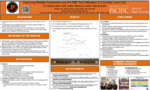
The quality improvement project evaluated the impact of staff education and a unit-wide mobility awareness campaign on the use of the Johns Hopkins Activity and Mobility Promotion tools and patient mobilization in a 48-bed Cardiac Care Unit (CCU). The project involved registered nurses, nursing assistants, unit leaders, and adult cardiac patients represented by aggregate mobility data. A preliminary survey completed by 42 CCU staff members, CCU Partnership Council focus group, meetings with clinical nurse specialists, and a baseline unit audit identified inconsistent mobility practices, uncertainty regarding Johns Hopkins Highest Level of Mobility tool, and limited completion of in-room mobility signs. The intervention included three 10-minute staff education sessions with interactive case studies, the “Movement is Medicine” awareness campaign, a month-long unit challenge to improve mobility tool use complete with leaderboards, periodic audits, and recognition prizes. Patient mobility key performance indicators (KPI) were compiled throughout the process and monitored for trends. Staff feedback was obtained post-implementation through a survey and repeat CCU Partnership council focus group. Quantitative data were analyzed using compliance percentages, mobilization averages, trend comparisons, and a run chart. Qualitative data were analyzed for recurring themes. Average daily patient mobilizations increased from 1.5 times in February to 1.7 times in April. Baseline data indicated unit compliance of in-room tool completion was 0% in February and peaked at 13.5% during the March Movement Challenge, ultimately not meeting the 50% unit compliance goal. The percentage of patients mobilizing at least three times per day also increased from 37.3% in March to a maximum of 39.8% in April. Findings suggested the education and awareness strategies were successful but insufficient to create long-term change without reinforcement. Future quality improvement projects should address perceived barriers including workflow integration, double documentation, sign fatigue, role uncertainty, and ongoing sustainability measures.
Keywords
mobility, JH-HLM, JH-AMP, AM-PAC, Cardiac Care Unit, Quality Improvement, Awareness Campaign, mobility challenge, education intervention
Recommended Citation
Joe, Courtney; Chaires, Clarissa; Martin, Jocelyn; and Sanchez, Eunice, "Improving Mobility Awareness and JH-AMP Tool Utilization on a Cardiac Care Unit" (2026). ELMSN E-Portfolio. A collection of Scholarly and Creative Works. 40.
https://scholarlycommons.pacific.edu/nursing-portfolios/40
